 Image 1 of 1
Program Notes
I wrote this tone poem based on the Old English epic of the same name. Written around 975 and 1025 AD, Beowulf is a story of heroism, courage, hubris, and greed. Beowulf, the main hero of the story, fights three monsters throughout the story, each of beasts represent fundamental societal anxieties and abstract evils.
Grendel, the first of the monsters, represents fear of the unknown. Grendel has been plaguing the Danes, attacking their great hall, Heorot, for twelve years before Beowulf comes to their aid. Beowulf and his men arrive and spend the night in the hall waiting for Grendel to attack. When he does, they quickly realize their weapons have no effect on this beast. Naturally, Beowulf decides to go completely nude and fight Grendel with his bare hands. In all of his glory, Beowulf rips off Grendel’s arm, causing the creature to flee back to its home, where he dies.
Grendel’s mother becomes the next monster, seeing her son return and die in front of her, she travels to Heorot and steals Grendel’s arm back, killing many men as she does. She represents vengeance and feuds. Beowulf tracks her to a lake and dives down, taking several hours to reach the bottom, but eventually finding a cave where Grendel’s mother resides. The vicious fight ends when Beowulf decapitates the mother with a giant’s sword. Finally, he has brought peace to the Danes and has cemented himself as a hero.
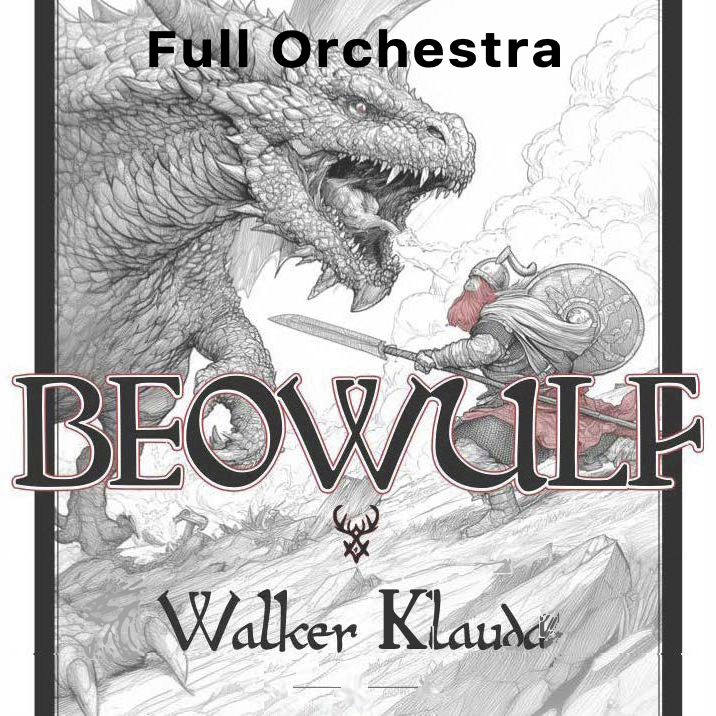
Many years pass and Beowulf returns home to the Geats, where he becomes king. After many long years without battle, he begins to long for his youthful adventures. Thankfully, a dragon is found to have attacked a small town after a thief steals a golden chalice from its hoard. Beowulf excitedly rushes to the dragon’s liar, all too keen to fight another monster. The battle quickly turns bad, as Beowulf realizes his age has caught up to him. They exchange fatal blows, finally ending the fight. In his dying words, he tells his friend Wiglaf, who aided him in battle, to fetch a pile of the dragons gold so he can gaze upon it and to build a massive statue of him for all to remember. The dragon represents greed, and it is fitting that in the end, greed is what kills the mighty Beowulf. But the legend of Beowulf will always be remembered as a hero.